
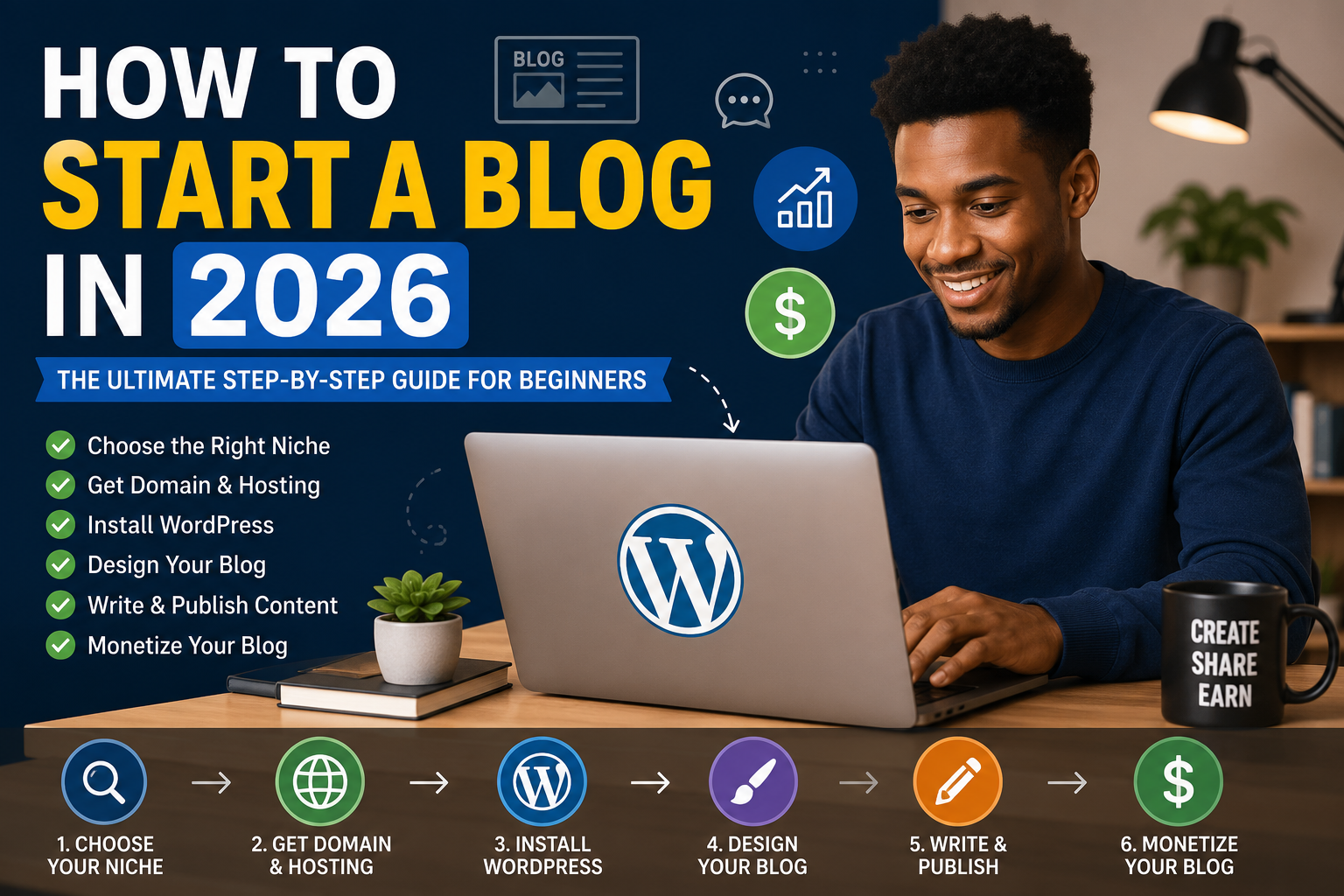
Introduction How to Start a Blog in 2026
Let’s be completely honest: learning how to start a blog in 2026 can feel overwhelming at first. The internet is packed with conflicting advice, outdated tutorials, and technical terms that make blogging seem far more complicated than it actually is.
The truth is that starting a successful blog today doesn’t require coding skills, a computer science degree, or years of experience. With the right roadmap, you can launch a professional website within a few hours and begin building an audience immediately.
In this guide, you’ll learn exactly how to start a blog in 2026, choose the right niche, set up your website, create valuable content, and prepare your blog for future monetization.
Why Start a Blog in 2026?
Blogging remains one of the most powerful ways to build an online presence. Whether you want to share your knowledge, promote a business, build a personal brand, or generate passive income, a blog gives you complete control over your content and audience.
Some of the biggest benefits include:
- Building authority in your niche
- Creating long-term traffic through Google
- Earning income through affiliate marketing
- Growing an email list
- Promoting products and services
- Creating multiple online income streams
The sooner you start, the sooner your content begins working for you.
This is why learning how to start a blog in 2026 today can change your digital future.
Step 1: Choose Your Blogging Niche
Before you buy hosting or install WordPress, you need to decide what your blog will be about.
This is called your niche. Understanding this foundation is critical when planning how to start a blog in 2026.
One of the biggest mistakes beginners make is trying to write about everything. Google prefers websites that focus on a specific topic because it helps establish topical authority.
Follow Your Interests
Choose a topic you genuinely enjoy discussing. Blogging is a long-term game, and selecting a niche you love makes it easier to stay consistent. how to start a blog in 2026.
Popular blog niches include:
- Technology
- Personal Finance
- Health and Fitness
- Digital Marketing
- Travel
- Education
- AI Tools
- Online Business
Check Market Demand
Before choosing a niche, make sure people are actively searching for information related to it.
Use tools like Google Search, Google Trends, and keyword research platforms to identify demand.
Evaluate Monetization Potential
A profitable niche usually offers:
- Affiliate programs
- Digital products
- Sponsored content opportunities
- Advertising revenue
A niche with strong monetization options can turn your blog into a real business over time.
Step 2: Secure Your Domain Name and Web Hosting
Your domain name is your blog’s address on the internet.
Your web hosting is the service that stores your website files and makes them available to visitors.
Choosing reliable hosting is one of the most important decisions you’ll make.
What Makes a Good Hosting Provider?
A beginner-friendly host should offer:
- Fast loading speeds
- Strong security
- Reliable uptime
- Easy WordPress installation
- Responsive customer support
Recommended Hosting Providers
For beginners, some of the best options include:
- Hostinger https://www.hostinger.com/
- Bluehost https://www.bluehost.com/
- Namecheap
- SiteGround
If you’d like a complete comparison, check out our guide on The Best Web Hosting Providers for Beginners in 2026.https://mohametblog.com/the-best-web-hosting/
Pro Tip
Cheap hosting may save money initially, but slow websites often lose visitors and rank lower in search results.
Investing in quality hosting from the start can save you countless headaches later.
Step 3: Install WordPress and Create Essential Pages
After purchasing hosting, install WordPress.
WordPress powers more than 40% of all websites worldwide and remains the most popular content management system available.
Most hosting providers offer one-click WordPress installation.
Once WordPress is installed, create these essential pages:
About Page
Tell visitors who you are and why your blog exists.
Contact Page
Give readers and potential business partners a way to reach you.
Privacy Policy
A privacy policy is important for legal compliance and advertising programs like Google AdSense.
Disclaimer Page
If you’re using affiliate links, include a clear affiliate disclaimer.
Step 4: Install Essential WordPress Plugins
Plugins add extra functionality to your website.
However, avoid installing too many because they can slow down your site.
Rank Math SEO
Rank Math helps optimize your content for search engines and improves your chances of ranking on Google.
Elementor
Elementor allows you to create professional page layouts without coding.
LiteSpeed Cache
This plugin improves website speed and performance.
WPForms
WPForms makes it easy to create contact forms.
Wordfence Security
Wordfence protects your website from hackers and malicious attacks.
Step 5: Write Your First Blog Post
Now comes the most important part: creating content.
Content is the foundation of every successful blog.
When writing articles:
- Focus on solving real problems
- Use clear H2 and H3 headings
- Keep paragraphs short
- Include relevant keywords naturally
- Add images and examples
- Make your content easy to read
Remember, your goal is to help readers, not just rank on Google.
The more value you provide, the more likely visitors are to return.
Step 6: Learn Basic SEO
SEO (Search Engine Optimization) helps people find your blog through search engines.
Without SEO, even the best content may struggle to get traffic.
Important SEO practices include:
- Using keywords naturally
- Writing compelling titles
- Creating quality content
- Optimizing images
- Building internal links
- Improving website speed
If you’re interested in productivity and content creation, don’t miss our guide on:
Top 5 AI Tools in 2026
These tools can help you research topics, generate ideas, and improve your writing workflow.
Step 7: Monetize Your Blog
Once you have consistent traffic, you can start earning income.
Affiliate Marketing
Promote products and earn commissions when readers make purchases through your links.
Display Advertising
Programs like Google AdSense allow you to earn money from ad impressions and clicks.
Sponsored Posts
Companies may pay you to review products or publish promotional content.
Digital Products
You can sell:
- E-books
- Courses
- Templates
- Guides
Many bloggers eventually earn more from digital products than from advertising.
Frequently Asked Questions
How much does it cost to start a blog?
Most beginners can launch a blog for less than $100 per year, including hosting and a domain name.
Is WordPress free?
Yes. WordPress itself is free, but you’ll need hosting and a domain name.
How long does it take to make money blogging?
Results vary, but many bloggers begin seeing income within several months of consistent publishing.
Can blogging still be profitable in 2026?
Absolutely. Businesses, creators, and marketers continue to use blogs to generate traffic, leads, and revenue.
Final Thoughts
Learning how to start a blog in 2026 is much easier than most people think.
Choose a niche, secure reliable hosting, install WordPress, publish valuable content, and learn the basics of SEO.
Don’t worry about making everything perfect on day one.
Every successful blogger started with zero visitors, zero experience, and a single published article.
The most important step is simply getting started.
Ready to Launch Your Blog?
Choose your niche, register your domain, install WordPress, and publish your first article today.
One year from now, you’ll be glad you started.
Conclusion
Starting a blog in 2026 is one of the smartest ways to build an online presence, share your knowledge, and create long-term income opportunities. While the process may seem challenging at first, choosing the right niche, investing in reliable web hosting, setting up WordPress, and consistently publishing valuable content will put you on the path to success.
Remember, every successful blogger started with a single article. Don’t wait until everything is perfect—launch your blog, keep learning, and improve as you grow. The more high-quality content you publish, the greater your chances of attracting readers, ranking on Google, and turning your blog into a profitable online business.
Pingback: Top 5 Essential Tools for Beginner Bloggers